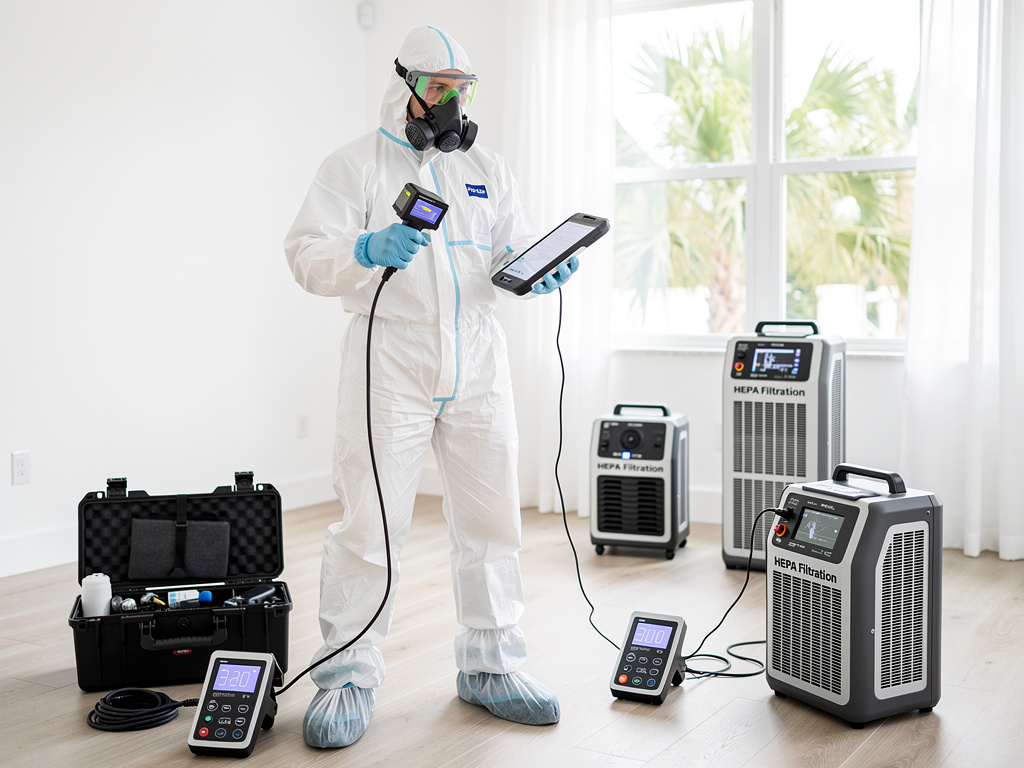
Introduction to Advanced Mold Detection Technologies
Mold growth in residential properties poses serious health risks, especially in humid climates like West Palm Beach, FL. Traditional mold inspections rely heavily on visual observation, which often misses hidden or early-stage mold infestations. However, technological advances have revolutionized mold detection, improving accuracy, reducing costs, and enabling proactive remediation. This post explores four cutting-edge technologies that West Palm Beach mold inspectors use to safeguard homes in communities such as Flamingo Park, Grandview Heights, and Northwood.
Infrared Thermal Imaging: Detecting Moisture Behind Walls
Infrared thermal imaging cameras capture temperature variations on surfaces, revealing moisture accumulation where mold thrives. Since mold growth often results from hidden leaks or condensation, thermal imaging helps inspectors locate problem areas behind walls, ceilings, or floors without demolition.
By identifying temperature anomalies, infrared cameras allow professionals to pinpoint moisture intrusion early, limiting the growth of hazardous mold species like Stachybotrys chartarum. This technology aligns with IICRC standards for effective water damage and mold inspections.
Cost: Infrared inspections typically range from $150 to $400 per session, depending on property size and complexity.
ERMI DNA Testing: Molecular-Level Mold Identification
The Environmental Relative Moldiness Index (ERMI) test uses DNA analysis to detect and quantify mold spores in dust samples. Developed by the EPA, ERMI testing provides a detailed profile of mold species present, including toxic molds that visual inspections may miss.
ERMI testing is especially useful for homes in West Palm Beach neighborhoods like Northwood, where older constructions can harbor hidden mold reservoirs. Results guide remediation strategies by confirming the presence of harmful molds and the extent of contamination.
Cost: ERMI testing generally costs between $200 and $400 per sample, with professional collection recommended for accuracy.
Borescope Inspection: Visual Access Inside Wall Cavities
Borescopes are small, flexible cameras inserted through tiny holes in drywall or other surfaces to visually inspect hidden spaces. This minimally invasive technology allows inspectors to see mold growth directly inside wall cavities, crawl spaces, and HVAC ducts without extensive demolition.
Used alongside infrared imaging, borescope cameras enhance detection accuracy by confirming suspected mold presence. This method supports IICRC guidelines by minimizing property damage while maximizing inspection thoroughness.
Cost: Borescope inspections can cost between $100 and $300, depending on the inspection scope.
Air Quality IoT Sensors: Continuous Monitoring for Mold Spore Levels
Internet of Things (IoT) air quality sensors provide continuous monitoring of airborne mold spore concentrations and environmental conditions such as humidity and temperature. These smart devices alert homeowners and inspectors in real time to changes that may indicate mold growth.
In humid West Palm Beach neighborhoods like Flamingo Park, continuous monitoring helps prevent mold outbreaks by enabling timely interventions such as HEPA filtration and antimicrobial treatment. This proactive approach supports healthier indoor environments and reduces long-term remediation costs.
Cost: IoT sensor systems range from $300 to $1,000+ depending on features and coverage area.
Cost Comparison of Mold Detection Technologies
| Technology | Typical Cost | Key Benefits |
|---|---|---|
| Infrared Thermal Imaging | $150 – $400 | Non-invasive moisture detection behind walls |
| ERMI DNA Testing | $200 – $400 | Accurate species-level mold identification |
| Borescope Inspection | $100 – $300 | Visual confirmation inside wall cavities |
| Air Quality IoT Sensors | $300 – $1,000+ | Continuous, real-time monitoring of mold spores |
How Technological Advances Improve Accuracy Beyond Visual Inspection
Visual mold inspection alone is often insufficient because many mold colonies develop in concealed areas, such as behind drywall or under flooring. Advanced technologies provide complementary data:
- Infrared thermal imaging detects moisture before visible mold appears, enabling early intervention.
- ERMI testing identifies mold species by DNA, including toxic varieties like Stachybotrys chartarum, which may not be obvious visually.
- Borescope cameras provide direct visual evidence of hidden mold without destructive inspection.
- IoT air quality sensors continuously monitor airborne spores, offering early warnings that prevent severe infestations.
Together, these tools align with IICRC and EPA guidelines for comprehensive mold inspection and support effective remediation plans that often include HEPA filtration and antimicrobial treatment to restore healthy indoor air quality.
West Palm Beach Inspectors Offering Advanced Mold Detection
Several reputable mold remediation companies in West Palm Beach now incorporate these technologies to serve neighborhoods such as Flamingo Park, Grandview Heights, and Northwood. One trusted provider is West Palm Beach Mold Remediation Pros, located at 2101 Vista Pkwy, West Palm Beach FL 33411. They offer infrared thermal imaging, ERMI DNA testing, borescope inspections, and air quality IoT sensor installation as part of their comprehensive mold assessment services.
By using these advanced tools, West Palm Beach Mold Remediation Pros ensure accurate detection, efficient remediation, and long-term protection of your home environment.
Frequently Asked Questions
What makes infrared thermal imaging better than traditional mold inspections?
Infrared thermal imaging detects temperature differences caused by moisture behind surfaces, revealing hidden water damage and potential mold growth areas that visual inspections cannot see. This early detection helps prevent extensive mold infestations.
How does ERMI DNA testing work, and why is it important?
ERMI testing analyzes dust samples using DNA to identify and quantify mold species in a home. It is important because it detects toxic molds like Stachybotrys chartarum that pose serious health risks and guides targeted remediation efforts.
Are air quality IoT sensors necessary for every home in West Palm Beach?
While not mandatory, IoT sensors are highly beneficial in humid climates like West Palm Beach as they provide continuous monitoring that alerts homeowners to early signs of mold growth, reducing health risks and costly remediation.
Get a Free Mold Inspection in West Palm Beach
Same-day response across Palm Beach County. IICRC-certified technicians. No obligation.
2101 Vista Pkwy, West Palm Beach, FL 33411
(561) 594-5900 | IICRC Certified | Same-Day Response