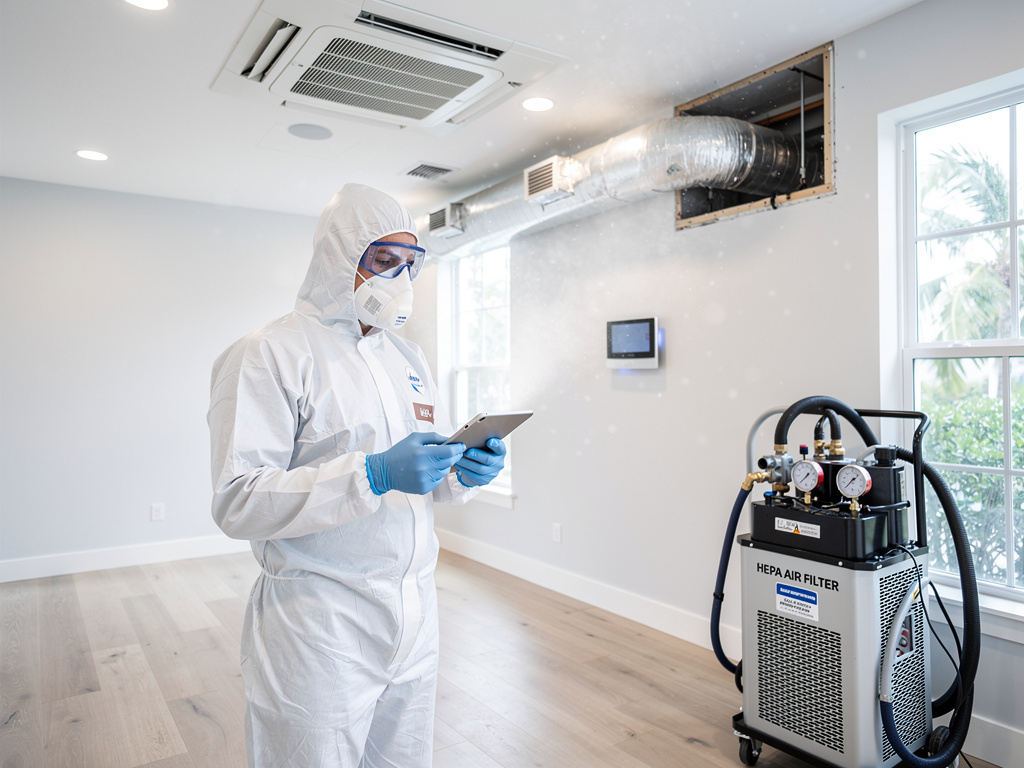
The Role of HVAC Systems in Mold Prevention in West Palm Beach Homes
In the humid climate of South Florida, particularly in West Palm Beach and neighborhoods such as Northwood and SoSo, HVAC systems play a critical role in either preventing or facilitating mold growth. Mold spores, including the notorious Stachybotrys chartarum, thrive in moist environments and can easily colonize HVAC components like ducts and coils. When mold develops inside the system, the HVAC can spread spores throughout the home, exacerbating health risks and property damage.
Following guidelines from the Institute of Inspection, Cleaning and Restoration Certification (IICRC) and the Environmental Protection Agency (EPA), homeowners must prioritize routine HVAC maintenance to ensure mold prevention is effective in West Palm Beach homes.
How Mold Spreads Through AC Systems in South Florida
South Florida’s high humidity levels create ideal conditions for mold spores to settle and grow on damp surfaces within HVAC systems. Common mold-carrying problem areas include:
- Air Ducts: Dust and moisture accumulation in ducts provide perfect breeding grounds for mold, which then circulates spores throughout indoor spaces.
- Evaporator Coils: These coils often collect condensation, fostering mold growth if not cleaned regularly.
- Drain Pans and Lines: Standing water or clogged drainage can increase moisture levels, encouraging mold proliferation.
Without proper cleaning and inspection, mold spores can easily enter living areas in neighborhoods like Grandview Heights, impacting residents’ respiratory health and indoor air quality.
Recommended Duct Inspection Frequency and Coil Cleaning
To control mold growth, the IICRC recommends HVAC duct inspections at least once every 1-2 years, but in South Florida’s humid climate, annual inspections are ideal. Specifically:
- Duct Inspections: Look for visible mold, moisture, and debris build-up. Use HEPA filtration vacuuming during cleaning to capture spores effectively.
- Coil Cleaning: Evaporator coils should be inspected and cleaned at least once a year to remove biofilms and prevent mold colonies.
Professional antimicrobial treatments can be applied to HVAC components after cleaning to inhibit future mold growth, a practice highly recommended for homes in moisture-prone areas like SoSo.
Humidity Control Settings for West Palm Beach Climate
Maintaining indoor relative humidity (RH) between 45-55% is crucial to prevent mold growth. The EPA notes that mold growth is unlikely below 60% RH, but South Florida’s natural humidity often exceeds this, especially during summer months.
Homeowners should:
- Use dehumidifiers in conjunction with central AC systems.
- Set thermostats and humidistats to maintain 45-55% RH levels.
- Ensure HVAC systems are sized properly to avoid excessive moisture inside ducts.
Proper humidity control helps reduce airborne mold spores and improves overall air quality.
Benefits of UV Light Systems in Mold Prevention
Ultraviolet (UV) light systems installed inside HVAC units target mold spores and bacteria on coils and drain pans. UV-C light disrupts mold DNA, preventing reproduction and growth. This technology is especially effective in humid regions like West Palm Beach, providing continuous antimicrobial protection.
UV systems complement routine cleaning and humidity control, significantly reducing the risk of mold colonization in neighborhoods such as Northwood, where older homes may be more vulnerable to moisture intrusion.
Annual HVAC Maintenance Checklist for Mold Prevention
Adopting a thorough annual maintenance routine is essential for mold-free HVAC systems. The checklist below aligns with IICRC best practices and EPA recommendations:
- Inspect air ducts for visible mold, debris, and moisture buildup.
- Clean evaporator coils thoroughly to remove dust and potential mold biofilms.
- Check and clear drain pans and condensate lines to prevent standing water.
- Install or verify proper operation of UV-C light systems within the HVAC unit.
- Test and adjust indoor humidity levels to maintain 45-55% RH.
- Replace air filters regularly with HEPA-rated filters to trap mold spores and other allergens.
- Conduct an antimicrobial treatment on HVAC components after cleaning if mold presence was detected.
- Schedule professional duct cleaning services at least every 1-2 years, annually recommended in humid climates.
Following this checklist helps ensure that HVAC systems in West Palm Beach homes remain mold-free and maintain healthy indoor air quality.
Frequently Asked Questions
How often should I have my HVAC ducts inspected for mold in West Palm Beach?
Due to South Florida’s humid climate, it is recommended to inspect HVAC ducts annually. This frequency helps detect and address mold growth early, especially in moisture-prone neighborhoods like SoSo and Grandview Heights.
Can UV light systems completely eliminate mold in HVAC units?
UV light systems effectively reduce mold growth on coils and drain pans by disrupting spore reproduction, but they should be used alongside routine cleaning, humidity control, and filter replacement for comprehensive mold prevention.
What humidity level should I maintain indoors to prevent mold growth?
Maintaining indoor relative humidity between 45-55% is optimal for preventing mold growth in West Palm Beach homes. This range reduces moisture without causing excessive dryness, aligning with EPA recommendations for mold prevention.
Contact West Palm Beach Mold Remediation Pros at 2101 Vista Pkwy, West Palm Beach FL 33411 or call (561) 594-5900 for expert HVAC inspection and mold remediation services tailored to South Florida’s unique climate challenges.
Get a Free Mold Inspection in West Palm Beach
Same-day response across Palm Beach County. IICRC-certified technicians. No obligation.
2101 Vista Pkwy, West Palm Beach, FL 33411
(561) 594-5900 | IICRC Certified | Same-Day Response